
Skip to content
Human Right Commission of United Nation

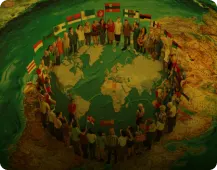
The Human Rights Commission of the United Nations (HRCUN) was established in 1946 to create a strong legal framework for protecting fundamental human rights and freedoms worldwide. Initially composed of 53 member states, the commission’s responsibilities expanded over time, allowing it to address a wide range of human rights issues and set global standards for state conduct. It also became a significant platform where nations, intergovernmental organizations, and human rights activists could raise concerns about violations and advocate for justice.


Role and Function of HRCUN

Each year, the commission holds a regular session in the USA, where over 4,000 delegates from member states, observer states, and intergovernmental organizations participate. During these sessions, the commission adopts numerous resolutions, decisions, and statements on critical human rights issues affecting people worldwide. It is supported by the Sub-Commission on the Promotion and Protection of Human Rights, multiple working groups, and a network of experts, rapporteurs, and representatives who investigate and report on specific human rights violations.

History and Key Developments

Formation of Helsinki Watch

In 1978, the HRCUN took a significant step by forming Helsinki Watch, an initiative designed to support citizen groups in monitoring government compliance with the 1975 Helsinki Accords. This marked the beginning of a strategic approach known as “naming and shaming”, where governments violating human rights were exposed through media coverage and direct engagement with policymakers. The international attention generated by Helsinki Watch contributed to the democratic transformations in Eastern Europe and the Soviet Union in the late 1980s.

Establishment of Americas Watch

As civil wars spread across Central America in the early 1980s, the commission established Americas Watch in 1981. This initiative aimed to document human rights abuses by both government forces and rebel groups. It relied on on-the-ground investigations and applied international humanitarian law to assess war crimes. Americas Watch also scrutinized the role of foreign governments, including the United States, in supporting oppressive regimes.

Expansion to Other Regions

During the 1980s, the HRCUN expanded its efforts by creating additional regional committees:

  • Asia Watch (1985)
  • Africa Watch (1988)
  • Middle East Watch (1989)

These regional branches collectively became known as the “Watch Committees”, addressing human rights violations specific to their regions. By 1988, the organization officially adopted the all-encompassing name Human Rights Commission of the United Nations to reflect its global commitment to human rights protection.

Major Contributions and Advocacy

Addressing War Crimes

In the 1990s, the commission played a crucial role in exposing human rights violations during wars. Its investigation of the 1991 Persian Gulf War was the first to highlight violations of war laws during bombing campaigns.

The commission also turned its attention to ethnic cleansing and genocide, particularly in Rwanda and the Balkans. By providing real-time reporting and detailed documentation of atrocities, the HRCUN helped push for international prosecutions.

Role in International Justice

The commission actively supported the establishment of international tribunals to prosecute war criminals. It played a key role in seeking justice for victims of leaders such as:

  • Augusto Pinochet (Chile)
  • Hissène Habré (Chad)

Additionally, the commission contributed to the drafting of the Rome Statute, which led to the creation of the International Criminal Court (ICC).

Human Rights
Join The Community
Please enable JavaScript in your browser to complete this form.
=
Call
You can call us here
Become Volunteer
Back To Top